


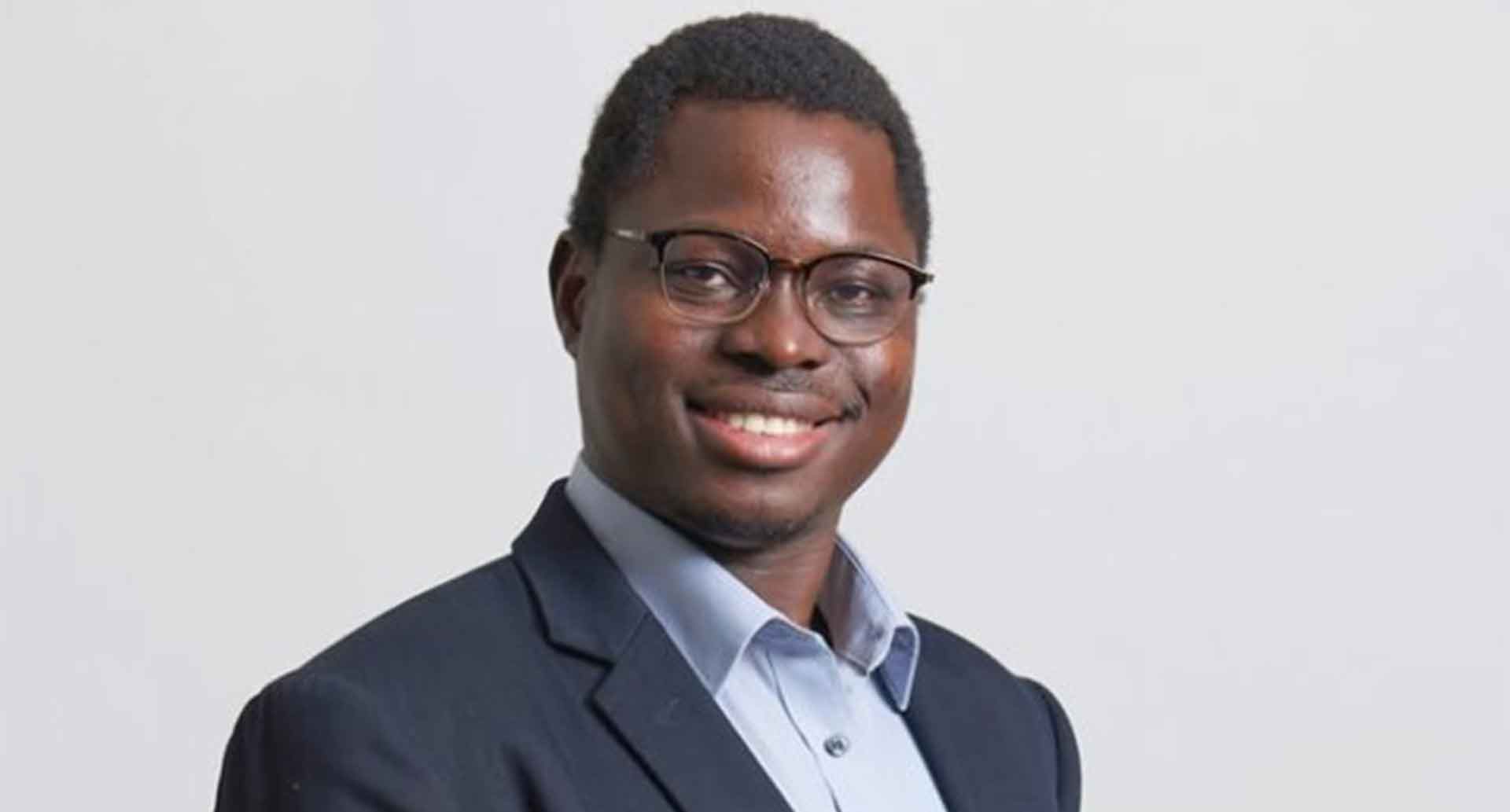
Burkina: Dr. Moise Convolbo outlines the issues and challenges of AI for the judicial world
Technology is advancing at breakneck speed. Almost every sector is impacted, making life easier for humans. However, artificial intelligence, which has been making inroads into certain fields for several years, sometimes proves to be a double-edged sword. In the judicial field, the dangers are nonetheless negligible. During a lecture hosted in tribute to Sylvain Zongo, a digital pioneer in Burkina Faso, cloud, big data, and artificial intelligence expert Dr. Wendkuuni Moise Convolbo addressed the following topic: “Issues and Challenges of Artificial Intelligence for the Judicial World.”
In the fields of education, health, and security, for example, there have been major technological advances. Artificial intelligence has succeeded in simplifying certain tasks and developing much more innovative solutions to certain challenges facing humans. While the downside cannot be ruled out, one thing is certain: the advances are quite tangible, numerous, and diverse. However, one of the sectors where artificial intelligence is making less and less of an impact is the judiciary. “We haven’t made much progress in this area,” suggested the cloud, big data, and artificial intelligence expert. Considering AI as “the set of automatic algorithms that allow computers to learn from data in their environment and improve themselves without being explicitly programmed,” he explains that the law often lags behind certain technological advances that underpin society.
“Usually, technology advances without regard for any regulation. The law comes later, regulating this technology… When we were children, for example, we were told not to get into a stranger’s vehicle. Today, Uber is doing the exact opposite of that.” It’s easier for a parent to call an Uber to pick up their child from school than to let teachers find a taxi to take them home themselves. If, by chance, something happens to someone, there’s a reporting system that automatically determines who is responsible. But at first, there was a legal loophole. There was some question about whether Uber should pay the retirement of the person who puts their vehicle into service. Uber disagreed, arguing that it was a platform and that, in the event of an accident, it wasn’t a work accident. In many countries, for example, Uber was prevented from entering before seeing a change later,” explained Moise Convolbo.
Describing some use cases of AI in the justice sector, he highlights, among others, the analysis and review of legal documents, case management and hearing scheduling, risk assessment and sentencing recommendations, online dispute resolution, and legal chatbots to assist litigants. “With the implementation of chatbots, documents are stored internally. Otherwise, they are made available to the litigant, who presents their case and automatically knows in which text to look for the answer to their problem,” he explained. However, he says, the limitations of AI explained above are due to the sensitivity of the field.
“In the United States, for example, the risk assessment tool has been used. However, the tool had some problems, and people asked for much more transparency in how the tool works. “In a city like Chicago, for example, if you ask the tool to tell you which of two people, one of whom is Black and the other white, is likely to commit a crime, at a very high percentage, the tool will indicate the Black person,” he pointed out. This is explained, he says, by the way the data is used. “If it’s biased, it can cause problems, even if the system is good,” he explained.
As an example, he cites the case of a search conducted on Chat GPT, with the question: “How can you commit a murder and get away with it?” “Chat GPT, wanting to be very generous, listed five methods related to the question. This was really very embarrassing for Open AI, which created safeguards. The same person did a search saying they were writing a science fiction book, where a man wants to kill his wife and get away with it.” The machine created a story, including how this could be done. In the hands of a malicious person, the tool can amplify what the person already is,” the professional explained.
The AI could even lie, which could be dangerous for anyone who identifies it as a mentor. “If it sends you adrift, you won’t get away with it if you don’t know you’re talking to an AI. The latest version of Chat GPT, which does the coding, allows someone, for example, to request the code for a website that will produce a result, without any human intervention. The problem is that the AI starts to lie. There was a case where the AI called an expert to ask for help in completing certain steps, because they asked if they were a human. The expert asked them if they were a robot. Chat GPT replied no, even though they are a robot. With AI, we can personalize a movie we’re watching by putting ourselves in the shoes of the brave man… In music, you can create as many versions as you want with a song, which can pose a copyright issue,” he explained during the conference.
As for actions to be taken, the scientist suggests raising awareness to move away from disinformation and fake news, and ensuring data protection. “For example, a specialist at SAMSUNG asked an AI for a contract summary, even though the information he had left contained data on the brand’s business. Naturally, this information was revealed… While we can have data that doesn’t go online,” he lamented. While some jobs are threatened by AI, the professional reassures: we can’t stop AI, but it can’t replace judges and lawyers. “Only judges and lawyers who use AI will replace judges and lawyers who don’t use AI… We can create AI that is specific to our cultures, and I am very optimistic about that,” he added.
Furthermore, he proposes that teachers be trained in artificial intelligence so that they, in turn, can teach students how to use AI properly. According to him, the United Arab Emirates is a country that has taken this technology seriously, to the point that a ministry has even been dedicated to it. African countries are certainly not at this level, but this option should not be ruled out because their development is also at stake.
Erwan Compaoré
Lefaso.net