

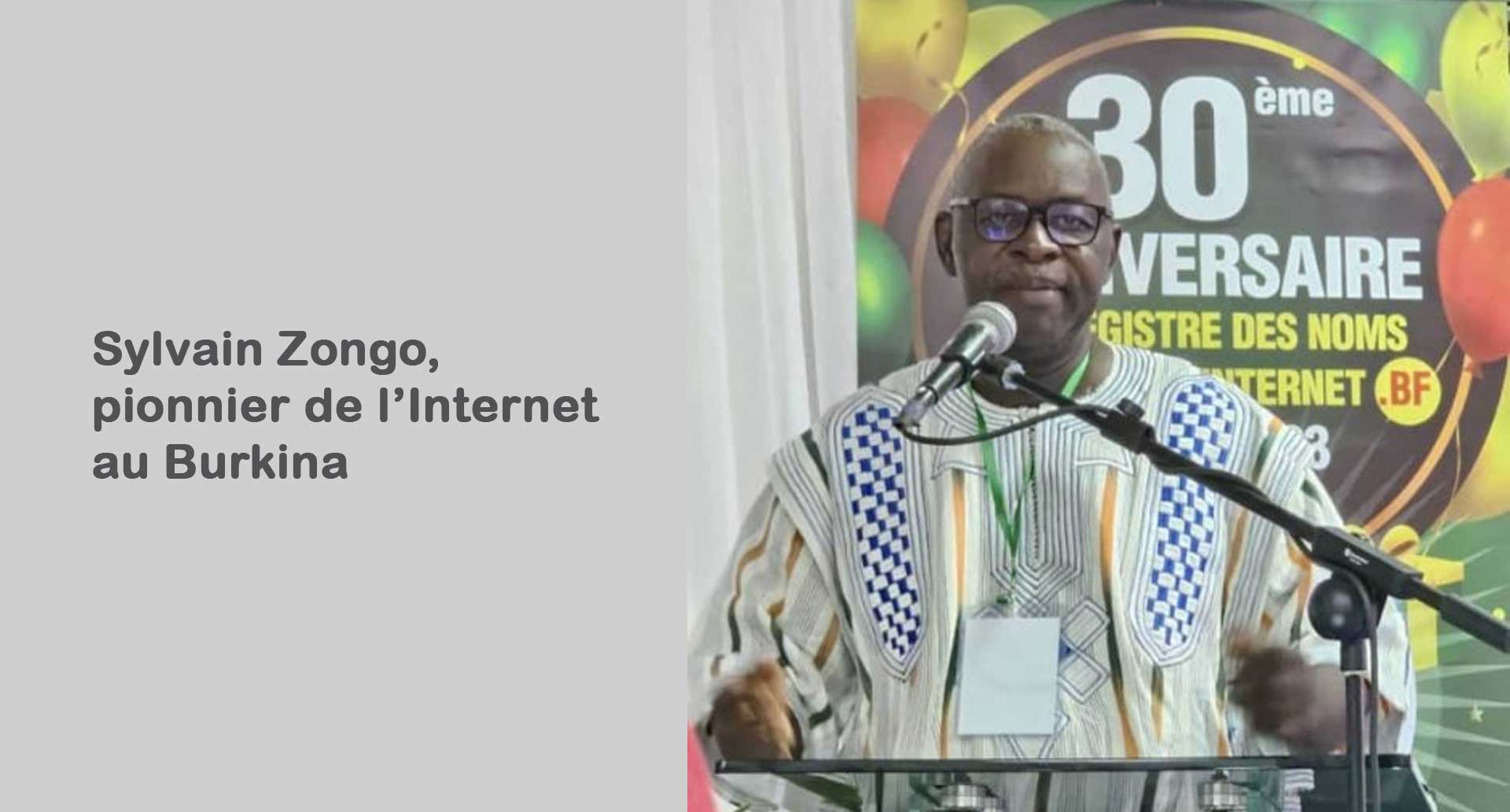
Sylvain Zongo, Internet pioneer in Burkina: “At one point during the crisis between Burkina and Ivory Coast, there was a telephone outage and the only place to reach this country was the ZCP phone booth.”
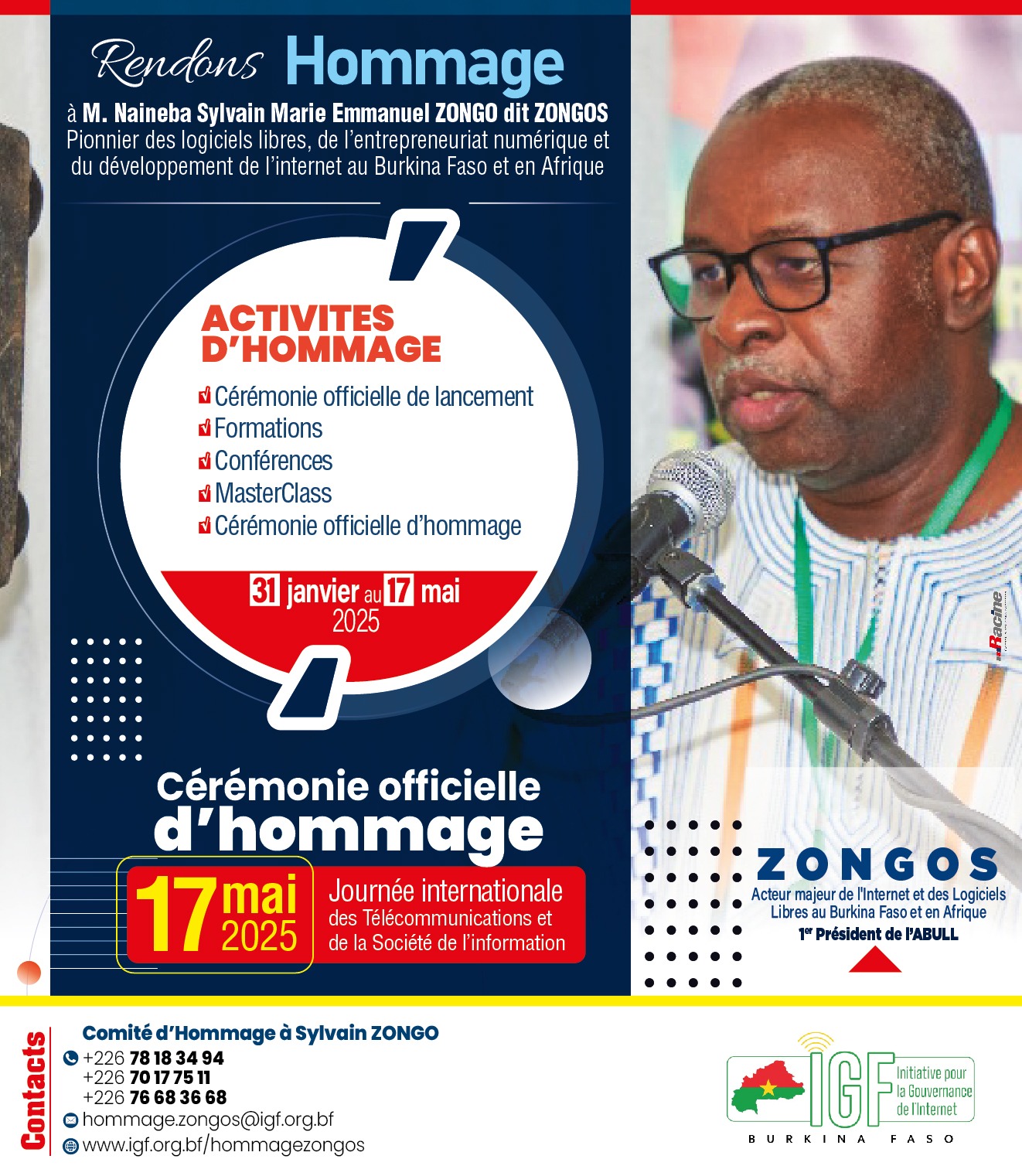
Sylvain Zongo is an Internet pioneer in Burkina Faso. After obtaining a postgraduate diploma (DESS) in Computer Science and its Applications in France in 1993, he returned home to take a position at the IRD (Institut de la Recherche Scientifique) before setting out on his own by founding his company, ZCP. For the past few weeks, ICT stakeholders have been paying tribute to him through various activities. We met with him. In this interview, he discusses, among other things, his journey in the field, the beginnings of the Internet in Burkina Faso, the main technical challenges, and the major technological and strategic developments observed over the years.
Lefaso.net: Can you tell us about your academic and professional background before becoming involved in developing the Internet in Burkina Faso?
Sylvain Zongo: I completed my baccalaureate C in 1987 at the Ouezzin Coulibaly high school, then my DEUG 2 in physics and chemistry at the IMP of the University of Ouaga before starting my degree in computer science in Rennes, France. I obtained a DESS in Computer Science and its applications and returned to Ouaga in September 1993. Recruited at the IRD (formerly ORSTOM) on April 9, 1994 as an IT manager. The IRD’s policy was to replace all French technicians with Burkinabe! As soon as I arrived, the fight began on two levels. The first was purely technical, because I had to prove that the Black man that I was could do everything that the White man did. At the same time, I was fighting against the salary policy that was in place. ORSTOM used to recruit African staff for low-level positions, and I was the first with a five-year bachelor’s degree. So, my salary was very high on the local staff pay scale and very low compared to expatriates. So, I fought the battle alone, and my employer found a solution by adding a monthly bonus to my salary, which didn’t appear on the paperwork! I was well known at headquarters in Paris as the Zongo case.
What motivated you to become interested in information and communication technologies (ICT)?
When I discovered Linux through a hydrology researcher (not a computer scientist, which just goes to show that the philosophy of free software goes far beyond computing), I installed it on PCs to replace the SUN mini-servers that were in use. This allowed us to use readily available machines. At the time, there was only one mini-server vendor for all of West Africa (LIPTINFOR). After it worked well, the idea of switching all internet services to open source software began to cross my mind. By installing open source software, I had direct control over the software, which allowed me to free myself from the supervision of my first managers based in Montpellier. It was also an opportunity to deepen my knowledge and, incidentally, it generated economic benefits for my employer. Things were going well in Ouagadougou. I was offered the opportunity to lend a hand to my colleagues in the sub-region, namely Mali, Niger, Côte d’Ivoire, and Senegal. After five years of service, I felt it was time to strike out on my own. Hence the ZCP adventure.
When did you realize the potential of the internet for Burkina Faso and Africa in general?
My experience at IRD Ouagadougou was so clear that the advantages of open source software were obvious:
1) Cost reduction by using open source software. Indeed, you can use machines that are easier to find, and therefore less expensive, and also eliminate the cost of licenses.
2) A training opportunity to enrich personal knowledge. At the time, I had one day of the week (Friday) dedicated to self-training. I learned a lot on my own. I have the example of Mr. Palé who arrived at the IRD as a night watchman. He had failed his baccalaureate and his parents no longer wanted to pay the fees for him to return to school. He was forced to find work. He arrived at the IRD as a night watchman and he did not understand why young people, instead of going to nightclubs, could stay in the office until 3 a.m.! He wanted to know what kept me busy. When there was a need for people to enter the researchers’ files, we integrated him into the data entry team. This was an opportunity for him to touch a computer. Following this experience, he wanted to continue learning computers and I introduced him little by little. After two years, he wanted to move to France. He was able to obtain the necessary papers and left for France in December 1999. With his knowledge of free software, he was able to work directly. He would send us questions about aspects he didn’t understand, and we would answer them. Today, he still lives in France! Just to say that with passion, you can go very far.
3) There’s also the security aspect. In all major countries, critical points operate with their own systems. You can take a free system and modify it to master all aspects. This is the case in China, which uses its own system and not Windows to avoid technological dependency. The main difficulty is having the courage to work every day. The obstacle is that many IT professionals prefer to work within the routine. The actions to be taken on a daily basis.
What were the first initiatives to introduce the Internet to the country? It is said that you made Burkina Faso’s first connection to the Internet; how did that go?
Most NGOs and those working with external partners had urgent needs for email access. Before the arrival of the Internet, UUCP was used to transfer data between servers in Ouagadougou and Montpellier over X25 lines. There were approximately 50 X25 lines in Burkina Faso. On April 9, 1996, there was a meeting in Miderande, South Africa, and ORSTOM researchers needed to access a database located on the Ouagadougou server. It was during this meeting that I configured the connection. This date can even be found on the Internet! When ONATEL wanted to connect the country to the Internet, I worked on a few aspects (management of the .bf domain name) at times with the ONATEL Internet project manager (the late Pierre Ouédraogo). When Mr. Ouédraogo moved to the French-speaking world, it was an opportunity to extend my experience at the IRD to other locations. It was an opportunity to discuss open source software in all French-speaking countries. We conducted Linux training on every continent, particularly in Africa. Linux clubs were established.
What were the main technical, financial, and regulatory challenges you faced at the time?
On that occasion, I set up a TCP/IP connection on the traditional PSTN telephone line and replaced the X25 connection with PSTN calls directly to Montpellier. This allowed us to reduce bills of around a million CFA francs per month to 250,000 CFA francs. This operation allowed us to halve the price of the RIO (Intertropical Computer Network) network.
How did public authorities perceive and support (or not) the growth of the Internet in the 1990s and 2000s?
No help from the authorities. The fundamental obstacle is that 0% of a lot is equal to zero, while 10% of a lot is a lot! Many stakeholders had an interest in seeing the bills rise. I remember the problems we experienced when we set up the first IP phone booth! At one point during the crisis between Faso and Côte d’Ivoire, there was a complete telephone outage between the two countries. The only place where you could call in Côte d’Ivoire was in the ZCP phone booth. The queue was very long and we were forced to limit the duration of calls to 30 minutes per person. I was summoned to the police (following a complaint from ONATEL). We also set up the first internet cafe (Cyberfrite) in collaboration with my brother and friend Simplice Méda, a visionary, passionate about business creation. We had a permanent connection. With my friend’s potatoes, we decided to bring the price of internet access and fries down to 500 francs each. This way, we could eat fries while surfing! We were 20 years ahead of schedule, I think…
What role did you play in the development of internet infrastructure and services in Burkina Faso, particularly with your company ZCP?
We didn’t influence the hardware aspects. We chose from the beginning to work on the software and training side. So, we were the first to develop websites. The first Burkinabe website was FESPACO’s.
Do you think the initial ambitions of digital development were achieved? Why?
We weren’t able to address security aspects. The problem wasn’t perceived by users, so it wasn’t easy to provide services for this service.
What are the main technological and strategic developments you’ve observed over the years?
The arrival of mobile connections with cell phones has made the internet more accessible. New services have emerged, and we simply have to consume them. We are witnessing the expansion of artificial intelligence. The impact is enormous, and the world risks evolving into a world beyond our control.
What are the main challenges today for the development of an inclusive and universally accessible internet in Burkina Faso?
One of the problems remains accessibility. Much effort has been made, but it is still relevant. We also need to address the issue of availability by ensuring the availability of power. Beyond these two elements, sufficient bandwidth is required to facilitate the use of tools that are increasingly resource-intensive.
As a member of the Burkinabe chapter of ISOC, what is your view on the issue of internet regulation and governance in the country?
I think ISOC is working in the right direction and the governance is good. We simply need to step up communication to raise awareness of the .bf domain.
What recommendations would you make to young entrepreneurs and digital innovators in Burkina Faso?
We must congratulate them and encourage them to use all the opportunities available to them.
Looking back, what conclusions do you draw from your career and your commitment to the Internet in Burkina Faso?
We should have seen greater use of free software. A free software training center could have been established! The results could have been greater. And it’s not late!
What are your current and future projects in the digital field?
One project that can yield big returns is the fight for our independence. We can choose free software in sensitive areas. But we can also save money by using this software. For example, we can use LibreOffice throughout the administration to avoid purchasing licenses. This will keep young people busy and position the country well in the digital world.
What message would you like to send to future generations regarding the importance of digital technology and ICT?
Digital technology offers many opportunities, and we can learn a lot. Everyone must find their passion and self-educate themselves in it. Now that the connection is available, the new generation must get to work to become architects of the world of the future, not mere users of new possibilities. There are many opportunities, and we must stop being mere users.
Lefaso.net
Interview by Cyriaque Paré